
“I would love to tell you what I think of Jesus,
Since I found in him a friend so strong and true.
I would tell you how he changed my life completely,
He did something that no other friend could do.”
[Hymn singing]
Let’s pray.
God of all the earth, we come before you, knowing, O God, that our lives are in the palm of your hands. You give to us the number of our days will never exceed what is not in your plan. And O God, we thank you that you sent your Son that He might meet with us, we might receive Him, and might know the blessings of being right with God.
And so as we look at some things and those that you met, we ask That you’ll speak to us, Lord, from your word, and that alone. Let your Holy Spirit make the words that we read meaningful. For we ask these things in the precious name of the Lord Jesus. Amen.
As common with each one of us, we meet many people throughout our lives. But what is not common is when we think of those that Jesus met ... WE meet people by accident, or by appointment, or through some other way. The people that Jesus met, HE came looking for THEM. They didn’t know it. And if you belong to Christ, He came looking for you.
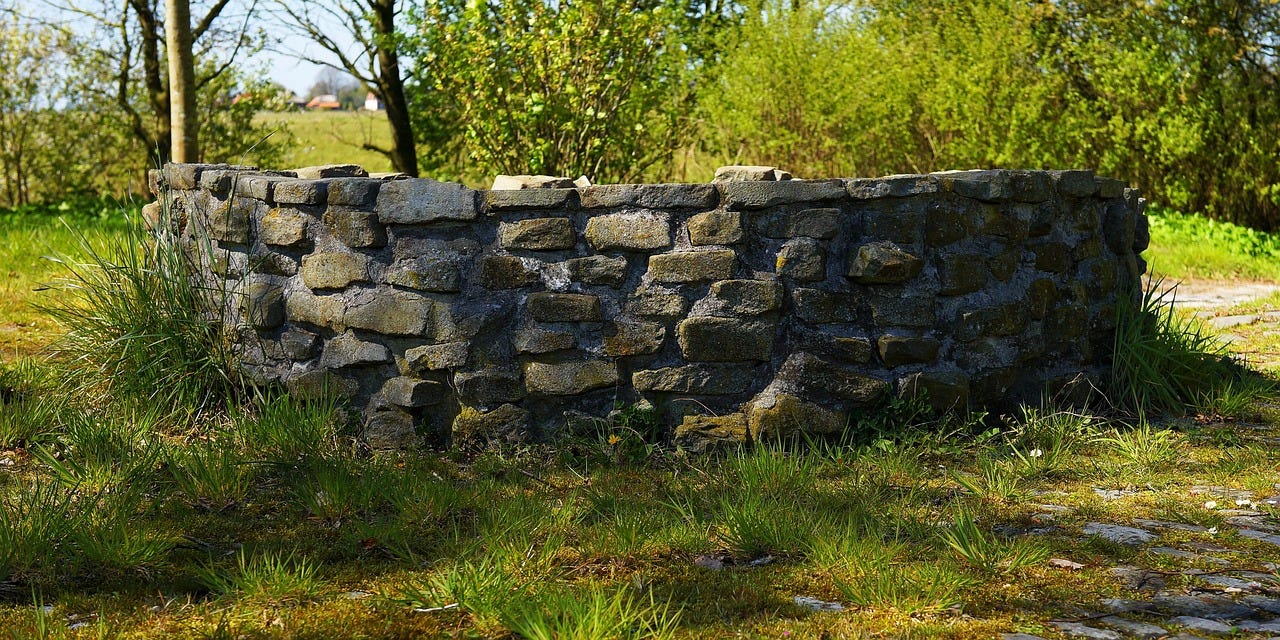
I want to turn to a a very well-known incident. It’s John 4. Please turn to John 4. It’s about what has been called “the woman at the well”. And the story is known well. Jesus is on a journey with His disciples. He’s coming from the south. and he’s going north. He’s coming from Jerusalem and he’s going back to where he was born in the region of Galilee. And as has been often said, the way which he came this way, he didn’t need to come this way, but he CHOSE to come this way. He came via Samaria, and a particular town called Sychar. And as he’s on his journey and he comes to this well, of which it said it’s Jacob’s well, referring back to the forefather Jacob who dug the well.
Jesus comes, and it says ‘he was wearied with his journey’ and so He sat by the well as he was. He just sat down as He was, like we do many times. Just as we are, He was wearied with his journey. As a physical journey - He was on another journey. And the journey that’s the most important journey, is the journey to find people. He wasn’t wearied with that. He was wearied with his normal journey. So He’s coming and He’s coming specifically to meet one person. And He’s searching for her. And lo and behold, as He’s there on his own, and the majority of the disciples are probably not there. Perhaps John was there because of the detail that’s recorded here. Maybe John was an observer.
But this woman comes, and if you’re looking down the road towards the village of Sychar, she was probably very discernible, as in those days they carried the jars on their hair, their head. And there was women who didn’t bother so much about their hairstyles, but you could tell - here’s a woman coming, and this woman did this thing every day, maybe two or three times a day. And she was coming as she came the day before. And perhaps one of her responsibilities was to take water, perhaps along with others, into the village. That was their water source.
And so she came with her jar, her vessel. She saw him, she recognised right away this man’s a Jew. even before he spoke, because he would have the blue tassels on the bottom of his garments. And she knew he was a Jew. And to her surprise, he says, “Will you give me to drink?” She thought, well, ‘why are you asking me for a drink?’ You know, you Jews don’t have anything to do with us Samaritans. So all of a sudden, if you’re reading this story, you’re saying, it seems to be two races here. Where did she come from? She knew where HE came from. Where did she come from? She said something later on when she realized, she says, “You want me to give you something to drink, but you don’t have anything to drink with”. And she posed - it’s almost two mini statements - she says, (first one) “are you greater than our father Jacob? Who gave us this well?” - Mistake number one. And how is it a mistake? Because Jacob wasn’t her father. She states her ancestry. Are you greater than Jacob?
The Son of God could have said, Wait a minute, you’ve got it all wrong. But he didn’t. Where did this woman come from? There’s an incident in the Old Testament - Israel was made up of twelve tribes. There came a schism in them. Two tribes, Benjamin and Judah, to the south, the other ten tribes to the north. They carried on as they carried on - and they did carry on against God. God had enough. And he sent this Assyrian power with the army and they finally, after three years’ siege captured the whole ten tribes. And it was like ethnic cleansing. They took everyone they could find. And they transported them from Israel up and down into regions of Mesopotamia. And then they repopulated the area by people from Kutha, Babylon, brought people back into Samaria.
That’s where she came from. Jacob wasn’t her father. But why did she say that? In Sychar There’s two mountains not far, Ebal and Gerizim. And we’ll speak about Gerizim a little bit later. But when this people, this foreign people, repopulated the area called Samaria, they got the name of being Where they came from - a Samaritan. And they certainly weren’t like our modern-day Samaritans. Well, they didn’t have telephones for a start, and they weren’t for helping people.
They took the Pentateuch, the first five books of the Bible. And they said, anything other than Genesis, Exodus, Leviticus, Numbers, Deuteronomy, anything after that is false.
They set up their own priesthood, they sacrificed the same sacrifices, they kept the same feasts, particularly the Passover. So there’s a culture that believes what they’re doing is worshiping God. And that’s why the difficulty she was finding. “But you’re a Jew. Why are you speaking ... Why am I speaking to you? Why are you speaking to me?”
And the Lord says, “if you knew who was speaking to you and the gift of God, you would be asking me for that gift, for living water” - not this water here.
Now I don’t know the intelligence of this woman. I don’t know if she was educated. But one thing she knew, in her own mind, this conversation was going on. He’s speaking about something that I don’t have. And the way in which he’s speaking about it, I want.
I remember that - see that hymn - “No one ever cared for me like Jesus” - that became very meaningful to me when I was 22 over in Australia. I was going through quite a bit of trouble. Emotional trouble, and that hymn was sung and it just seemed to meet my need.
“I would love to tell you what I think of Jesus,
For in him I’ve found a friend so strong and true”
“He did what no one else could do”.
And I found that in Christ.
And this woman realized He’s got something that I don’t have, and he’s speaking about it in a certain way. And when I was over in Australia, a man spoke to me about his love of Christ and I realized he enjoys having Christ in his life and I don’t have that. And it was the way he spoke about it, and the way in which Jesus spoke about it here, she knew that she was deficient in something. Sometimes we sing a hymn from the book here.
“Oh, that the world might taste and see, the richness of his grace”.
The Lord’s looking for people today as he was in those days. To fill their lives, the emptiness that’s there. And he knew this woman was so empty, and he came looking for her. So the story goes on, and here we come to the epicenter of the story.
The Lord wanted to give us something, but first He had to prepare the ground. He says to her, Go and call your husband. And I wonder if she sort of looked at him. And perhaps her whole body sort of changed; maybe she bowed her head a bit and says, “I don’t have a husband”. And the Lord says, “you’ve answered right for the one that you now have, the man that you now have is not your husband”. She must have been absolutely flabbergasted. “How in goodness’ name” she may have thought, “could he possibly know this?” Five husbands. “Mrs: what’s wrong with you that you’ve had five husbands?” In the community that she lived in, they followed the writings of Moses. And in Deuteronomy chapter 24 It has the instruction that if a man marries a woman and she displease him He can write a bill of divorcement, give it to her and send her out of the house. But everybody would know that the Bill of Divorcement meant that she hadn’t done anything immoral, because if she had, she would have been stoned.
This poor soul had five bills of divorcement. What was wrong with you? The Lord knew, but we certainly don’t know what was wrong with this woman. Every man that she was married to seemed to find something about her nature, her character, her ways, that displeased him. And obviously, she got the bill of divorcement, and she got married again. And Deuteronomy 24 says, if the second husband hates her. He could send her forth again. So, what do you call a woman who’s been married five times and divorced five times? You might say unlucky. Well, it depends who she was married to. I would say it’s shocking.
What did that do for this woman’s way in which she looked at herself? It’s bad enough. Have you ever known rejection? Have you ever known rejection? She knew it at least five times. And whatever was the reason, not one of us knows, but the one that was speaking with her, HE knew. And she was going to find out something about this man that had never taken place with any man. “Go and call your husband”.
The conversation changed, obviously, because she says in verse 20, “our fathers worshipped in this mountain, and you say that in Jerusalem is a place where men ought to worship.”
Jesus says to her “woman, Believe me, the hour comes when neither on this mountain nor in Jerusalem shall you worship the Father. You worship that which you know not. We worship that which we know for salvation is from the Jews”. Verse twenty-five - “The woman said to him I know that Messiah comes, which is called Christ. When he has come, he will declare unto us all things. Jesus says to her, I that speak with you am.”
The conversation changed from speaking about her marital state, to speaking about worship.
And she says, “Our fathers worshipped in this mountain”. Now, what she was referring to was Mount Gerizim - Mount Gerizim - the Samaritans built their temple there and carried out, as was said, the same sacrifices. In about 110 BC, a man called John Hyrcanus Who was the high priest in Israel at that time, raised an army, fought against the Samaritans and completely razed to the ground the temple in Gerizim. And it’s never been built again.
And yet, every year there is a Samaritan organization still, a group that meets in the ruins of Mount Gerazim.
“Our fathers worshipped here, and you say, you say Jerusalem’s the right place to worship” - but Jesus doesn’t press the point. He’s got something better to say than what’s going on in the time, on which he’s speaking about. He wants to bring her to somewhere. He knows that she wants living water And then she says something that provides the avenue for him just to come in. She says, “We know” - “we know”. Well then, how do you know that Messiah is coming? She could have said, well, “Moses says a prophet’s coming, like none other”. “We know that when the Messiah comes, he will teach us all things”.
And it was almost like saying, and he’s from the Samaritans, not from the Jews. They believed that. And Jesus just sets the record right. He could have said, “Jacob’s not your father”. Didn’t say that at all. You couldn’t ... What do they say ... “You could win the battle, but lose the war”. And Jesus let it go because he wanted to bring her to this point, (when she said “we know that Messiah comes”) - and Jesus just turned and says, “My dear, he that speaks with you I am.” In an instant - instantly the penny dropped. Instantly, she realized what the conversation was for.
And the amazing thing is in verse 28 it says this: “So the woman left her water pot, went away into the city, and says to the men, Come, see a man which told me all things that ever I did. Can this be the Christ? They went out of the city and were coming to him”.
She came back into the city. “Where have you been? Where’s the water?”
“Come and see a man that told me all things that ever I did!”
“Calm down, calm down!”
She left her water pot. And she fulfilled and showed what Paul spoke about in 2 Corinthians 4. “We have this treasure in earthen vessels.” What she didn’t know, she was going back and she was God’s vessel. She was going back with a treasure that she was going to share. With the people amongst whom she lived.
And her testimony was this. “You’ve got to come and see a man that told me all things.” Now, some of the things, we know what he told her, “this is not your husband”. I think there was a whole host of other things that Jesus would just bring to her and she would be absolutely confounded. With the knowledge that He had.
But the outstanding thing to me is what she doesn’t say, but what she knew. “Come see a man that told me all things.” And she could have added, “And you know what? In knowing all these things, you never blamed me. He never said I was wrong. He never got on to me. You know what? He just seemed to accept me as I am.”
I wonder what her partner said. “Who’s this man you’re talking about?”
“This man I’m talking about, his name’s Jesus. And he’s the Messiah. And he’s given me something that I couldn’t possibly get myself.”
“And how did you get it?”
“I believed what he said about himself: I am the Messiah.”
When she took her water pot, it probably couldn’t have been brim full because it was spill when she went into the village. SHE was full to the brim! It must have been with such a joy and such a genuineness, because they knew this woman.
And when she says, “Come and see a man”, and it says “They went out of the city and were coming to him”.
They went out. Why did they come out? They went out of the city because She so spoke in a way, she convinced him that what she had was nothing ordinary.
This area, Samaria, it was a very fertile place, and that’s borne out by what the Lord says to his disciples when you can see them coming down the road from the village, he says, “Look at the fields, they’re white unto harvest”. It was a place where corn and plant growth was in abundance.
But look what’s coming. Maybe the disciples were a bit taken aback. “Oh, what are we going to do?” The Lord’s always in control.
And they came. And they weren’t very sure. They were only going on the testimony of this woman. And when they came, and when they spoke with him, and when he said, as only what Christ could say And he imparted, “I’m the Saviour of the world. I’ve come to save you from your sins. Only if you’ll receive me.”
And they did. And so, when they had a chance to speak with the woman, From verse 39 it says,
“And from that city many of the Samaritans believed on him because of the word of the woman who testified, he told me all things that ever I did.
So when the Samaritans came unto him, they besought him to abide with them, and he abode there two days, and many more believed because of his word. And they said to the woman, Now we believe not because of your speaking, for we have heard for ourselves and know that this is indeed the Saviour of the world.”
They’re saying to her now, “We heard what you said” - but they would ever be indebted to her. Because she was a bridge that the Lord used to reach hundreds in that village.
And so it shows to you and I, for those of us who belong to the Lord, every day we should be seeking, if there’s an opportunity, to be the bridge from ourselves to those that we speak, about the Gospel of Christ to the end that we might say, to folks that we know,
“could I speak to you about a man who told me all things that ever I did? This is the Son of God, the Messiah.”
Shall we pray.